

A Journey Beyond The Ordinary
Mount Kilimanjaro is one of the world’s most iconic trekking destinations and a
bucket-list adventure for travelers from around the globe. Unlike technical mountain climbs,
Kilimanjaro can be reached by determined hikers with proper preparation, good equipment, and expert
guidance.
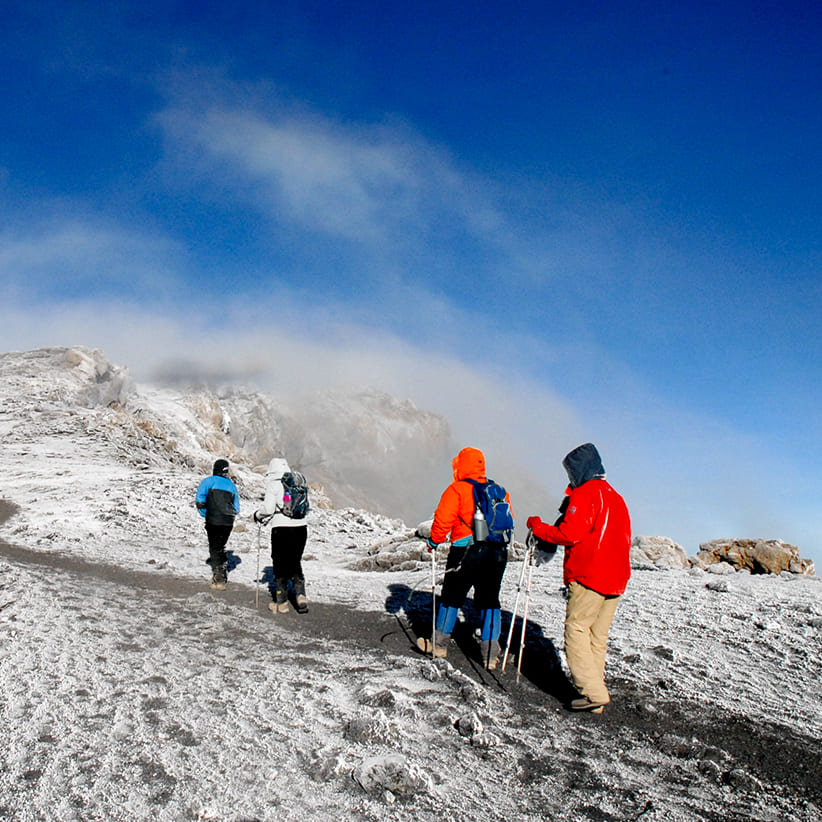
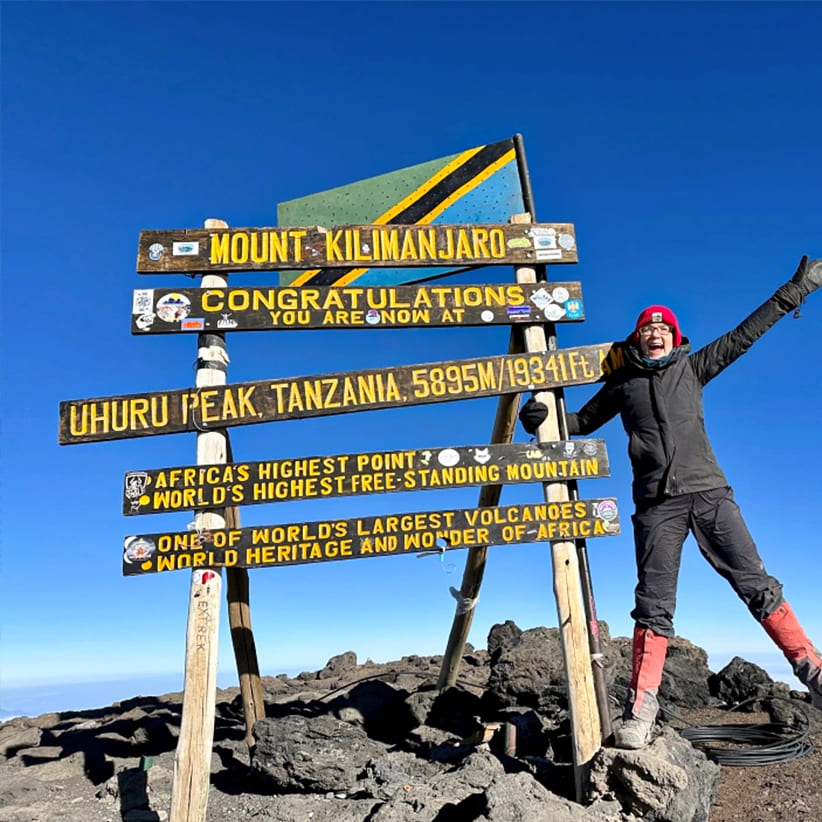
Every step takes you through changing ecosystems, unique landscapes, and unforgettable moments as you
make your way toward the Roof of Africa.
Routes & Itineraries
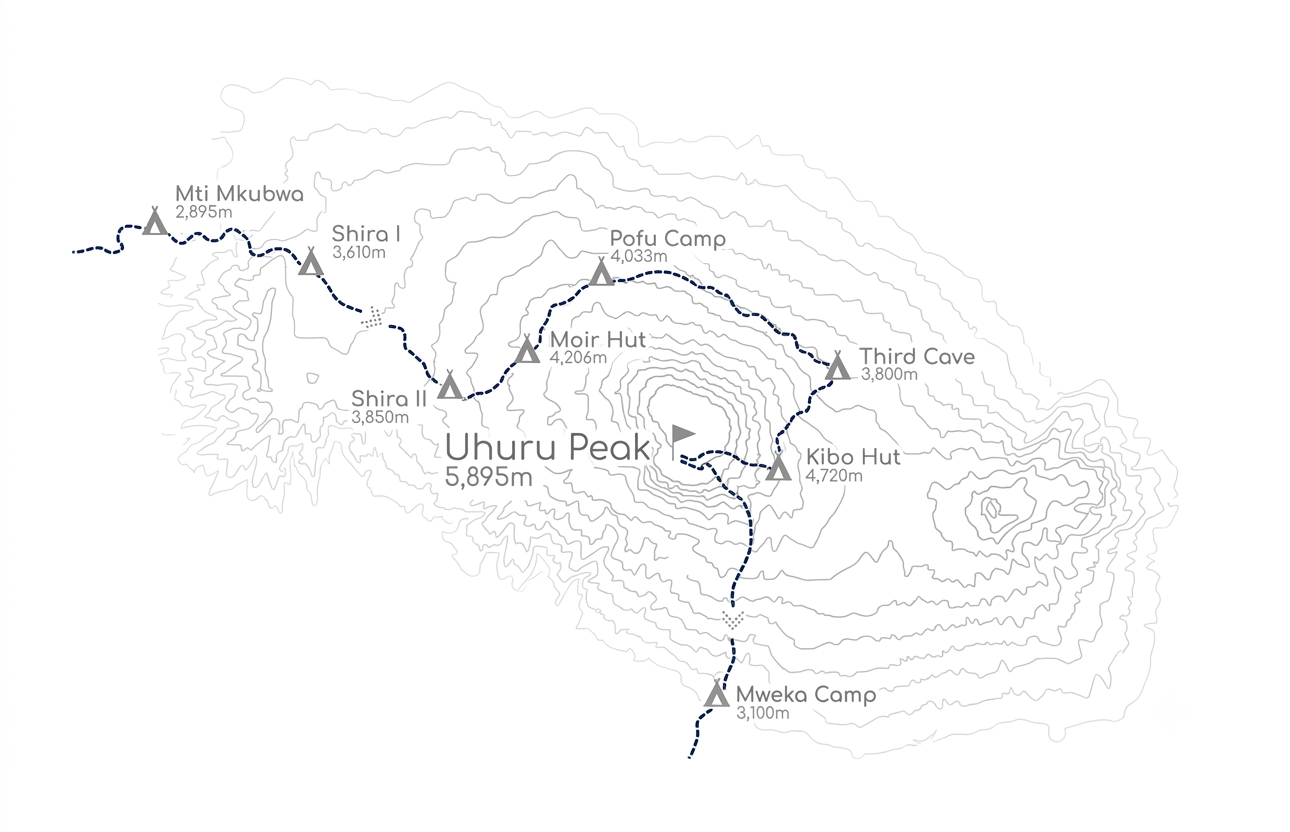
This route approaches Mount Kilimanjaro from the west. It offers a chance to visit Shira
Plateau (Cathedral peak) and Shira Caldera. Lemosho Route crosses from Shira Ridge to Shira 2
Camp, in a pleasant hike. Climbers encounter low traffic until the route joins the Machame
route. Afterwards, Lemosho follows the same route as Machame Route through Lava Tower,
Barranco and Barafu, known as the southern circuit.
The minimum days required for this route is 7 days, but eight days is recommended as it will
give more chance to acclimatize and achieve the summit. Like Machame, this is a scenically
spectacular and varied route. Lemosho is highly recommended and it has an abundance of
wildlife such as elephant, buffalo, eland and lion which come over to forage during dry season
from Longido Game Controlled Area.
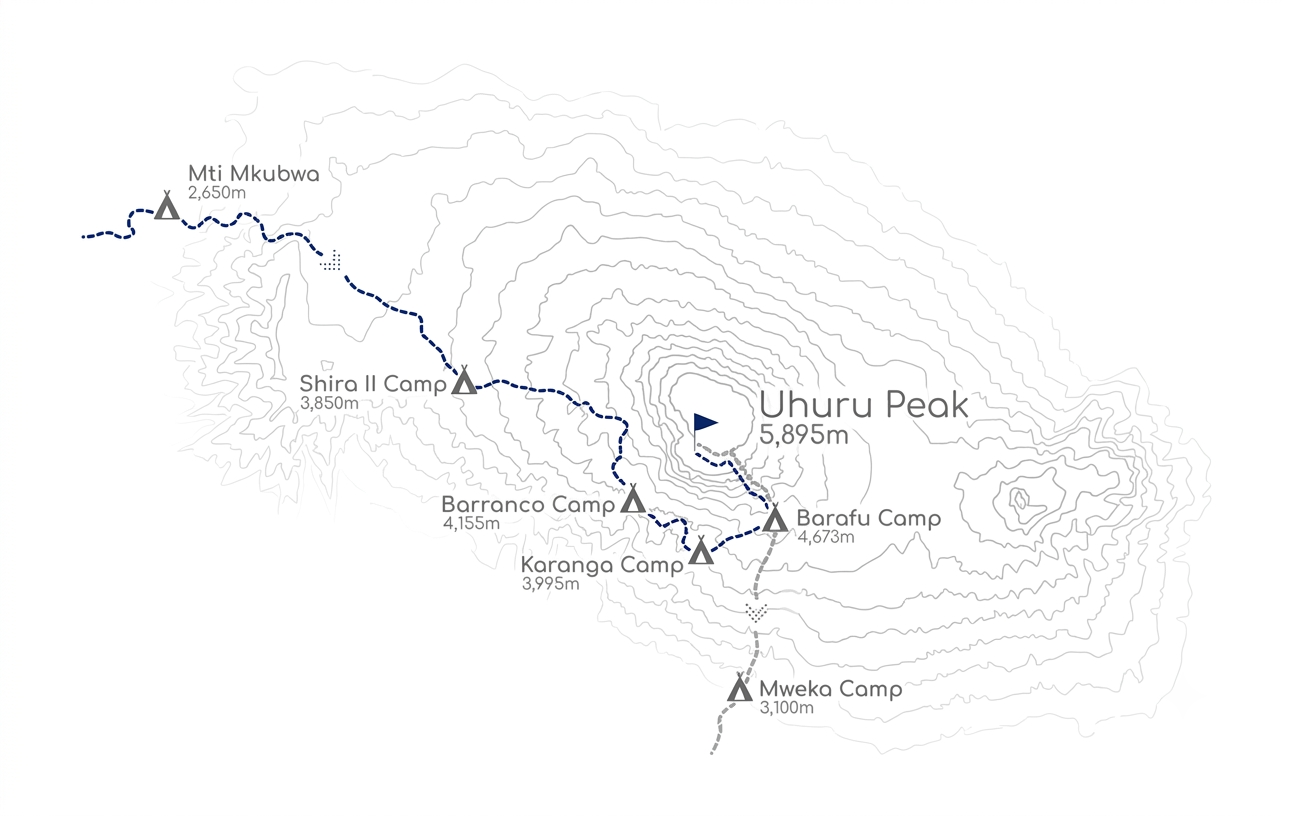
Machame Route, also known as the Whisky Route, has become very popular. This is camping route which offers spectacular views of various landscapes such as Mt Meru, Pare Mountains, Lake Chala, and Lake Jipe. This is a well designed route for altitude acclimatization. While the 6 day itinerary is very possible, it is very benefitable to choose the seven days Machame climb because of having one more extra day for acclimatization and resting before the summit day. Doing this will maximize your chance of reaching the top.
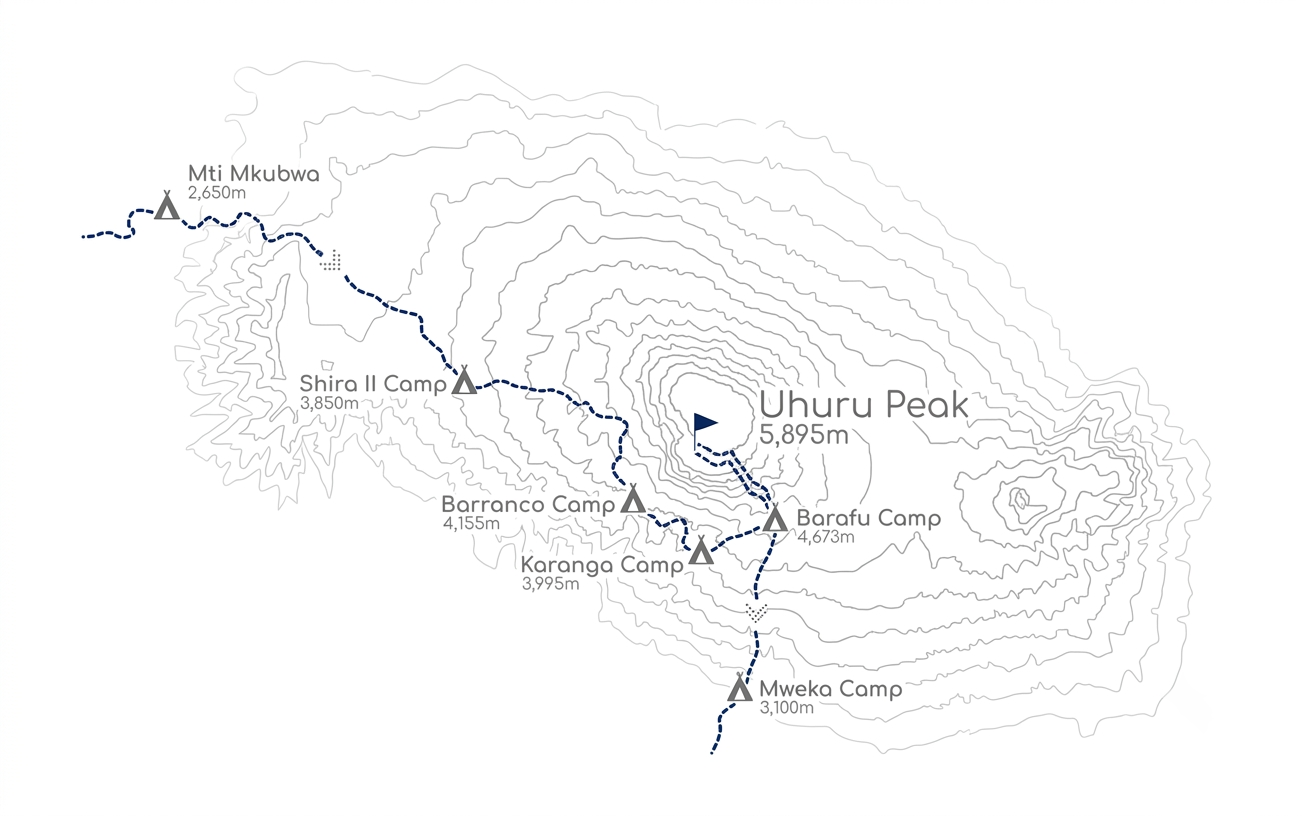
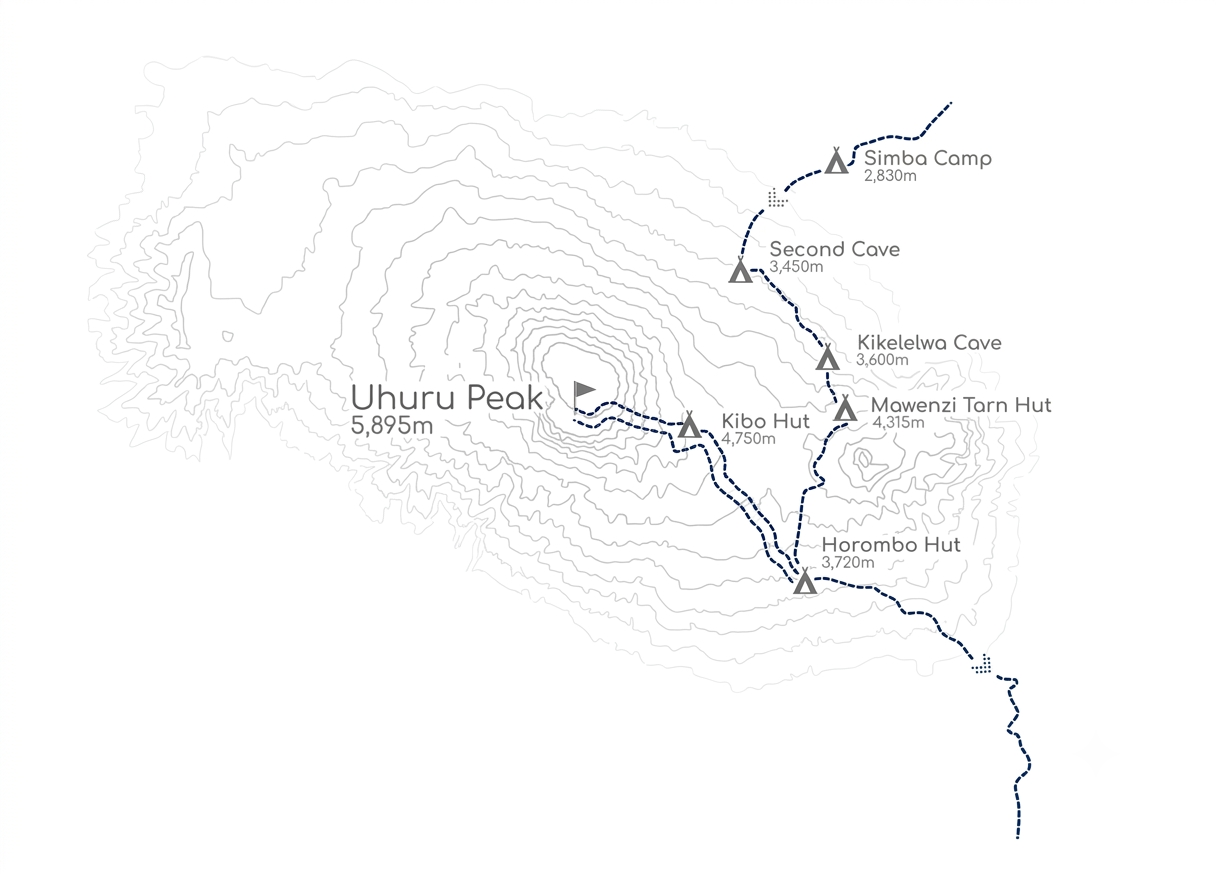
This route approaches Mount Kilimanjaro starting from the west. The trek follows the Lemosho Trail in the beginning, approaching Mt. Kilimanjaro where it offers a chance to visit Shira Plateau (Cathedral Peak) and Shira Caldera. However, instead of following the southern traverse like all the other west approaching routes, the Northern Circuit traverses the mountain around the quiet, rarely visited northern slopes. The Northern Circuit is the longest route in terms of time and distance as it can be trekked for 8 days or 9 days and it provides a high success rate, incredible varied scenery, and a very low number of visitors. The Northern Circuit Route is certainly one of the best routes on Kilimanjaro.
This is one of Kilimanjaro’s easiest routes, and its popularity has been increasing in recent
years. This route is located on the northern side of Mount Kilimanjaro with a variety of
spectacular landscapes together with different plants and animals species. A six day itinerary
for this route is also commonly used but adding an extra day makes reaching the summit more
obtainable yet.
The Rongai Route is more scenic than the Marangu Route and easier than other camping routes in
climbing Kilimanjaro and the success rate on the Rongai Route is very high. Unlike the Marangu
Route where you sleep in huts, on the Rongai Route you sleep in tents, the porter will have
your tent pitched and waiting for you at the end of each days trek. On the descent, there are
shared camps with Marangu Route at Kibo Huts and Horombo Huts, but the huts are not used for
those using Rongai Route.
This route starts on the north side of the mountain just south of the Kenyan border and is one
of the least traveled routes. The route merges with the Marangu Route for the summit climb.
The descend follows the Marangu Route on the mountain’s southeast side, so you will able see
Kilimanjaro from many view points. The north side of the mountain receives less precipitation
so it is a good choice during the wetter months of March - May, and November.
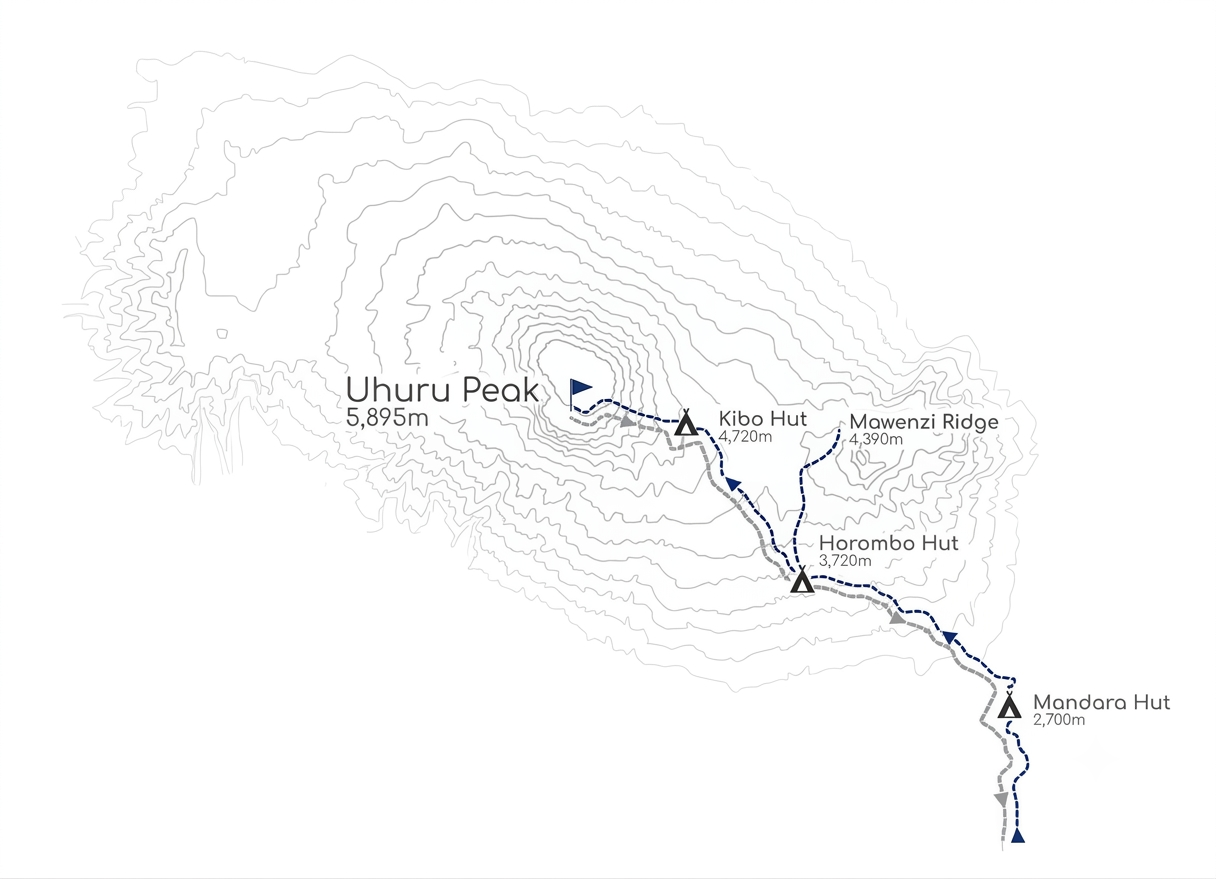
Also known as “Coca-Cola” Route, Marangu approaches Kilimanjaro from the southeast of the
mountain. It is the oldest established route. Many favor the Marangu Route because it is a
short route and has the comfort of sleeping in huts overnight. The minimum days required for
this route is five, although the probability of successfully reaching the top in that time is
a bit low.
Spending an extra acclimatization day on the mountain is highly recommended, increasing the
chance of reaching to the summit. Marangu is the only route where overnights are in dormitory
style accommodations with solar panel lighting. Camping is not an option for this route. This
route is not as scenic as the others though and it is the only route where the descending path
is the same as the ascending path, making some of the camps more crowded from people going
both directions.
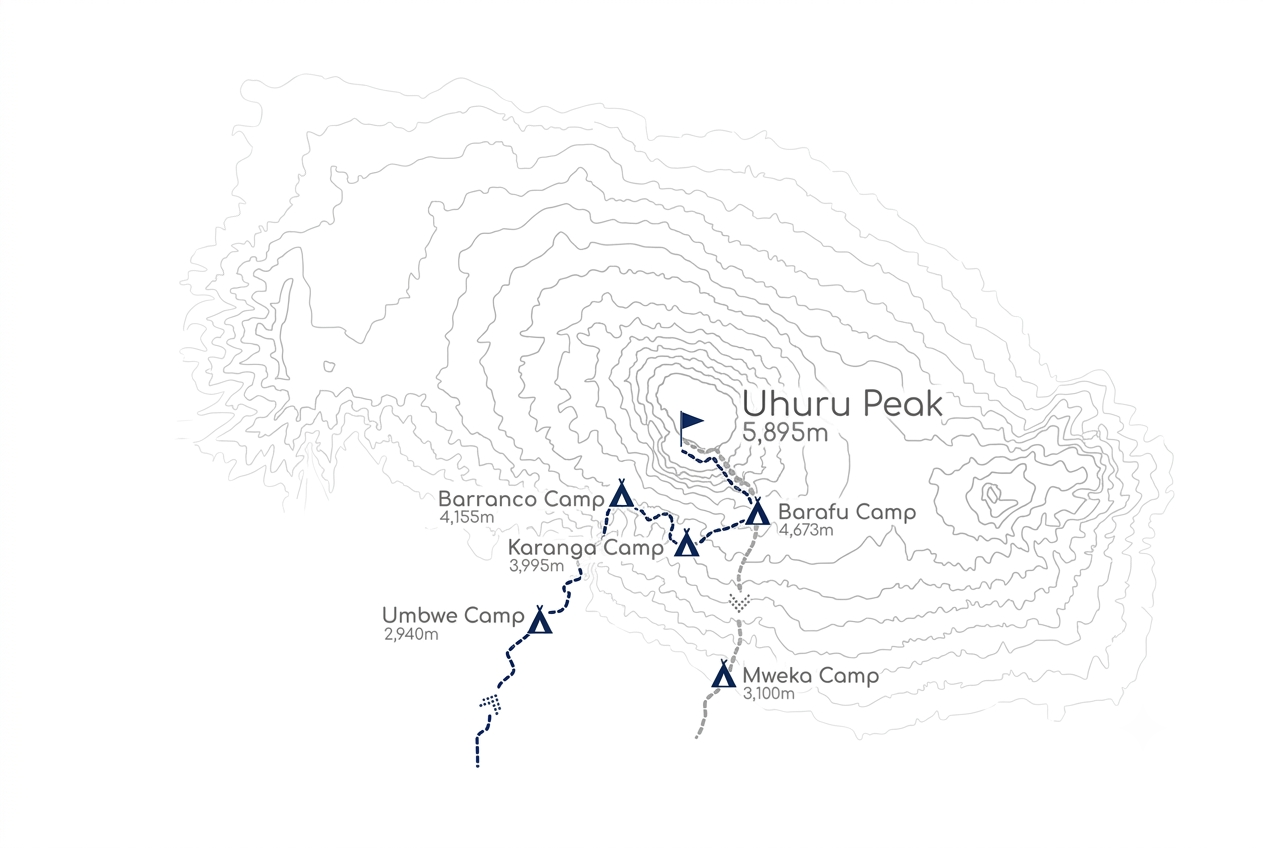
Umbwe is a short route, providing challenges as it is very difficult to climb due to its
steepness. Due to the fast ascension, this route does not provide the enough time for altitude
acclimatization for most people, so proceeding slowly is vital. This route is not busy at all
until it merges with the Machame, Lemosho, and Shira routes.
There is an option for a 6 days or 7 days itinerary. Since this route is chosen almost
exclusively by seasoned mountaineers who are looking for the biggest possible challenge, the 6
days itinerary is the most common choice so it is the only itinerary listed here, but if you
are interested in an Umbwe 7 Days itinerary, we can arrange this upon request.
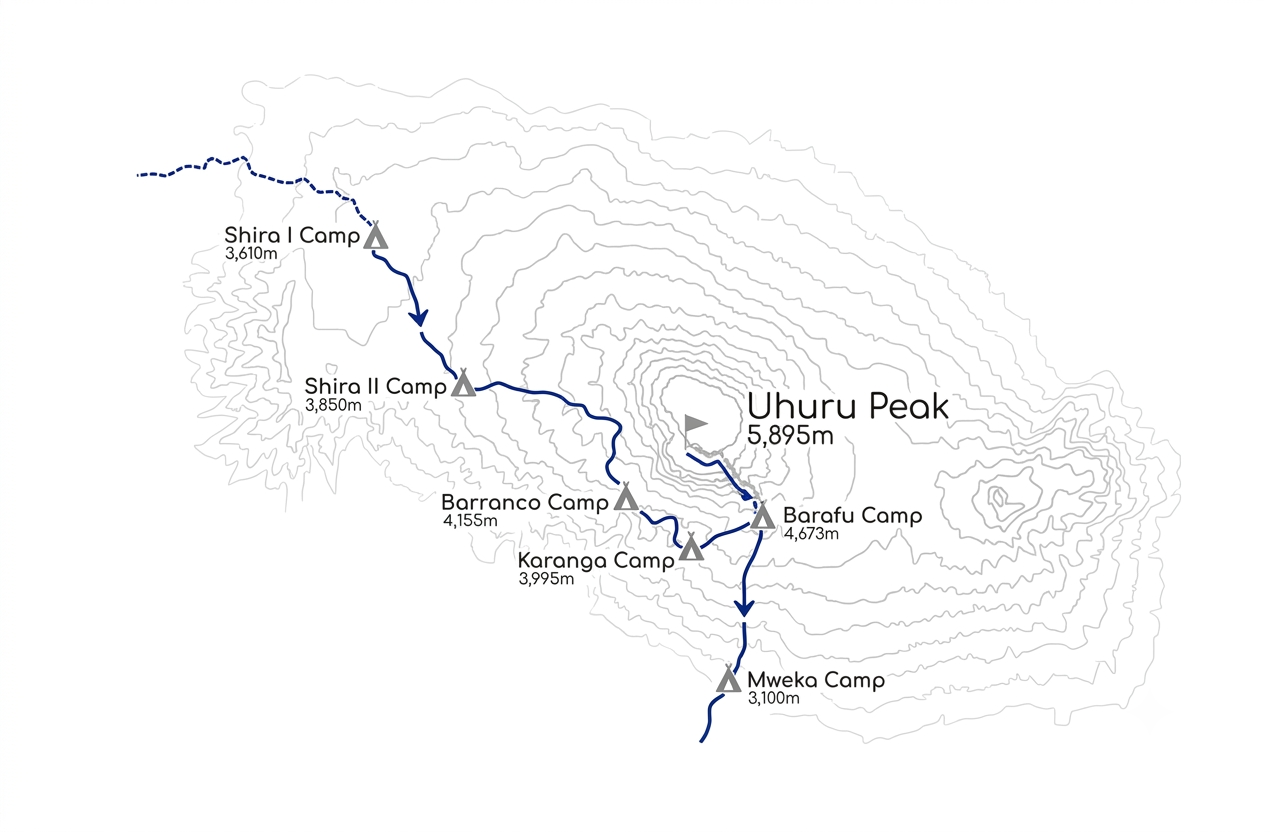
This route approaches Kilimanjaro from the west and is nearly identical to the Lemosho Route.
In fact, Shira was the original Lemosho Route in this western side of the mountain. While
Lemosho starts at Londorossi Gate and treks through the rain forest to Shira 1 Camp, the Shira
Route bypasses this segment by using a vehicle to transport climbers to Shira Gate, located
near the Shira Ridge.
On the first day on the mountain, climbers begin their hike from (3,400 m) and end at Shira
One Campsite, (3,5OO m). The remainder of the route is follows the southern circuit route,
traversing beneath the southern icefields before summitting from Barafu or Western Breach
Route.
The Ultimate Packing List
If you’re looking for a reliable packing list for your climb up Mount Kilimanjaro, you’ve landed in the right place. Our comprehensive list will help you be the best type of climber, prepared with the right balance of essentials while maintaining a manageable bag weight. Here’s the only Kilimanjaro packing list you’ll need to look at in the run-up to your expedition.
* Useful Tip
You can always opt to Purchase / Rent when you arrive in Tanzania.
For first-time climbers or anyone who doesn't have their own climbing gear, renting is a much more affordable choice than investing in top-quality gear you may only use one time.
* Note: Avoid buying the cheapest gear.
Kilimanjaro Packing Checklist
To stay safe, comfortable, and prepared throughout your Mount Kilimanjaro climb, having the right equipment is essential. This checklist covers the important gear and supplies needed for a successful trekking experience.
- Duffle Bag (70 Litres) – Your main bag carried by porters. Keep it under 15kg to support porter welfare and allow space for their belongings.
- Day Pack (30–40 Litres) – Your daily backpack for essentials such as water, snacks, camera, extra layers, and waterproof clothing.
- Dry Bags – Waterproof storage bags to protect your clothes, electronics, and personal items from rain and moisture.
Bags
- Sleeping Bag – A warm 3-season sleeping bag is suitable for most climbs. A 4-season bag is recommended for colder months.
- Sleeping Bag Liner – Adds extra warmth and keeps your sleeping bag clean during the trek.
- Sleeping Mat (Optional) – Provides additional insulation and comfort while sleeping.
Sleeping Equipment
- Trekking Boots – Strong, comfortable hiking boots with ankle support and waterproof protection are recommended.
- Trekking Socks – Carry enough pairs for daily changes and warmer wool socks for summit night.
- Camp Shoes – Lightweight shoes or sandals for relaxing at camp and nighttime movements.
Footwear
- Buff / Scarf – Protects your face from sun, dust, wind, and cold.
- Sunglasses (UV400) – Essential protection from strong high-altitude sunlight.
- Sun Hat – Protects your head and neck from heat and sun exposure.
Headwear & Eyewear
- Base layers for warmth and moisture control.
- Fleece jacket or warm mid-layer.
- Waterproof jacket and trousers.
- Warm summit clothing for cold temperatures.
- Comfortable trekking pants and thermal wear.
- Gloves and warm hats for summit night.
Clothing & Layers
- Head Torch – Essential for summit night and moving around camp after dark.
- Power Bank – There are no charging facilities on the mountain, so bring backup power for phones and cameras.
- GPS / Altimeter (Optional) – Useful for tracking progress and altitude.
Gadgets & Electronics
- Water Bottle / Hydration Pack – Staying hydrated is essential throughout the climb.
- Thermos Flask – Useful for carrying warm drinks, especially during summit night.
Water & Hydration
- Trekking Poles – Helpful for balance, climbing, and reducing pressure on knees during descent.
- Umbrella – Useful during rainy forest sections and sunny lower-altitude areas.
- Hand Warmers – Helpful for keeping hands warm during cold summit conditions.
- Mosquito Repellent – Recommended before and after the climb when staying at lower elevations.
Trekking Accessories
- Personal first aid kit for minor injuries and personal medication.
- Blister treatment and foot care supplies.
- Sunscreen and lip balm.
- Personal toiletries and wet wipes.
- Small towel for cleaning and freshening up.
First Aid & Hygiene
- Professional guides carry first aid equipment, oxygen support, emergency supplies, and safety equipment.
- Guides provide assistance with altitude awareness and mountain safety throughout the climb.
Safety Support